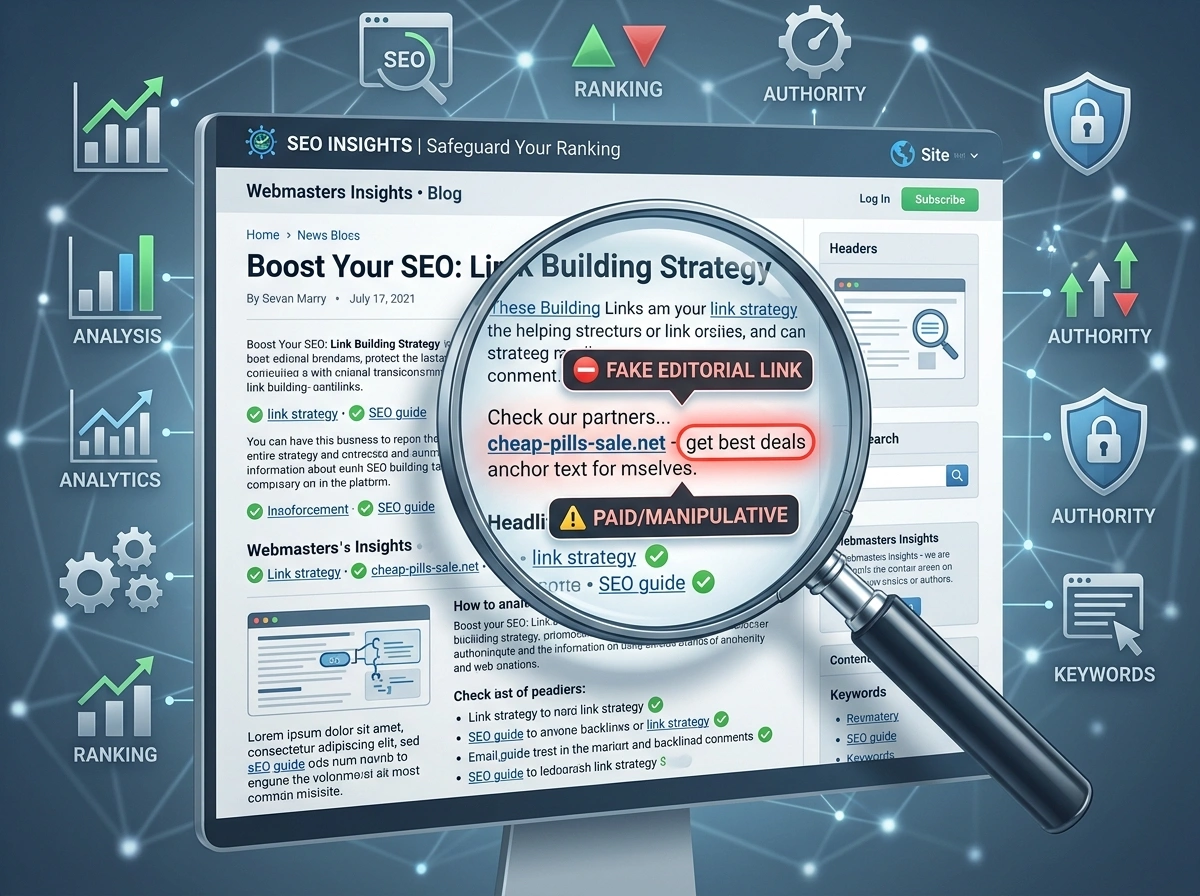
Building a website’s authority requires immense trust from both your target audience and search engines. Earning high-quality backlinks is one of the most effective ways to signal that trust and move up the search engine results pages. However, the relentless pressure to rank higher often drives website owners to seek shortcuts, leaving them vulnerable to sophisticated link-building scams.
The internet is flooded with offers for guaranteed placements, cheap domain authority boosts, and bulk link packages. While these promises sound appealing, they frequently rely on manipulated metrics and fake websites. Falling for these schemes will drain your marketing budget and can severely damage your organic search visibility.
This guide breaks down the mechanics of fake link placements, outlines the severe SEO risks involved, and provides actionable steps to safely build your site’s authority. You will learn exactly what to look for when evaluating publishers and how to partner with legitimate link-building professionals.
Understanding the Value of Genuine Editorial Links
Before you can spot a fake link, you need to understand what makes a real one so valuable. Genuine editorial links are earned when a publisher naturally links to your website within the body of an article because your content adds value to their readers. These links are not forced, hidden in footers, or placed on irrelevant sidebar widgets. They exist entirely for the user’s benefit.
Search engines like Google treat these contextual citations as powerful votes of confidence. When an authoritative publication links to your site, it transfers a portion of its authority to you. Securing premium editorial links from reputable domains can drastically improve your keyword rankings, drive qualified referral traffic, and establish your brand as an industry leader.
Because search algorithms are designed to reward these authentic endorsements, they are incredibly difficult to manipulate. True editorial placements require comprehensive outreach, high-quality content creation, and strict adherence to editorial guidelines. This high barrier to entry is exactly why scammers try to fake the process.
Common Red Flags: How to Spot Fake Editorial Links
Scammers have become highly skilled at disguising low-quality links as premium placements. By learning how to identify the following red flags, you can protect your website from toxic backlinks.
Unusually Low Pricing
High-quality link building is a resource-intensive process. It requires researching prospects, crafting personalized pitches, creating premium content, and negotiating with editors. If an agency or freelancer offers guaranteed placements on high-authority sites for a suspiciously low price, you are likely dealing with a scam. Cheap links almost always come from compromised sites, link farms, or automated software.
Private Blog Networks (PBNs)
A Private Blog Network is a group of websites created solely to link to other sites and manipulate search engine rankings. While a PBN site might boast a high Domain Rating (DR), it typically offers zero real value to internet users. You can often spot a PBN by looking for generic website designs, a lack of author bios, hidden ownership details, and an unnatural variety of unrelated topics published on the same blog.
Inflated Metrics with No Organic Traffic
Third-party metrics like Domain Authority (DA) or Domain Rating (DR) are useful benchmarks, but they can be easily manipulated by spammers pointing thousands of junk links to a domain. Always check a site’s estimated organic traffic using SEO tools. If a website boasts a DR of 60 but receives fewer than 100 organic visitors a month, search engines do not trust that site. A link from it will not help your business.
Non-Existent Editorial Standards
Legitimate publications have strict editorial guidelines. They care about their audience and carefully review any content before publishing it. If a website accepts poorly written articles, duplicated content, or posts completely unrelated to their niche (like a dental article on a technology blog), they are running a link farm.
The Dangers of Link Scams for SEO
Engaging in manipulative link-building practices is a direct violation of search engine guidelines. The consequences of getting caught can be devastating to your business.
Algorithmic Devaluations and Manual Penalties
Google’s algorithms are constantly updated to detect and ignore spammy links. At best, the search engine will simply devalue the fake links, meaning you wasted your money for zero SEO benefit. At worst, your site may incur a manual action penalty. This results in your website being completely removed from Google’s search index until the toxic links are removed or disavowed.
Permanent Reputation Damage
Recovering from a severe link penalty can take months or even years. During this time, your organic traffic will plummet, leading to a massive loss in revenue and leads. Furthermore, associating your brand with low-quality, spammy websites can damage your reputation among real consumers who stumble upon those dubious articles.
Strategies to Avoid Link Building Scams
Protecting your website requires a proactive and vigilant approach to off-page SEO. Implement these strategies to ensure your link-building efforts remain safe and effective.
Prioritize Contextual Relevance
Relevance is just as important as authority. A link from a smaller, highly relevant industry blog is much safer and often more effective than a link from a massive, generalized news site that covers everything from cryptocurrency to gardening. Always ensure the sites you target align closely with your specific industry.
Demand Complete Transparency
Never work with a link builder who refuses to share their prospect lists or methods. You have the right to know exactly where your links are being placed and how the outreach is being conducted. Legitimate agencies operate with full transparency and will gladly walk you through their strategic process.
Perform Manual Site Audits
Do not rely on spreadsheets full of SEO metrics. Click the links, visit the websites, and manually review the content. Ask yourself if the site looks like a real business. Do they have an active social media presence? Are real people leaving comments on the articles? If the site looks completely abandoned aside from a constant stream of low-quality guest posts, stay away.
How to Vet Link Building Partners
Outsourcing your digital PR and link building can yield incredible ROI, provided you choose the right partner. Follow these steps to vet potential agencies or freelancers.
Review Their Portfolio and Case Studies
Ask for specific examples of links they have secured for other clients in your industry. Verify that these links are still live, placed on websites with real organic traffic, and integrated naturally into the content. Strong case studies should demonstrate measurable increases in keyword rankings and organic traffic, not just a list of built links.
Analyze Their Outreach Process
Ask potential partners how they acquire their links. You want to hear about targeted email outreach, relationship building with editors, and data-driven content creation. If they mention private networks, guaranteed bulk placements, or using automated blog commenting software, end the conversation immediately.
Understand Their Content Quality
Because genuine editorial links rely on great content, you need to review the quality of the writing the agency produces. The content should be expertly written, fact-checked, and highly engaging. If an agency cuts corners on content creation, authoritative editors will reject their pitches, and your brand will end up on low-tier sites.
Secure Your Website’s Future with Authentic Backlinks
Earning authority in the eyes of search engines is not an overnight process. It requires strategic planning, high-quality content, and genuine relationship building. While the temptation to buy cheap, fake editorial links is strong, the long-term risks far outweigh any short-term gains.
By prioritizing transparency, insisting on strict editorial standards, and carefully vetting any link-building partners, you can safely navigate the complex world of off-page SEO. Focus on creating exceptional, data-driven content that naturally attracts citations, or collaborate with a reputable agency that respects search engine guidelines. Doing so will ensure your organic traffic grows sustainably, keeping your brand visible and trusted for years to come.