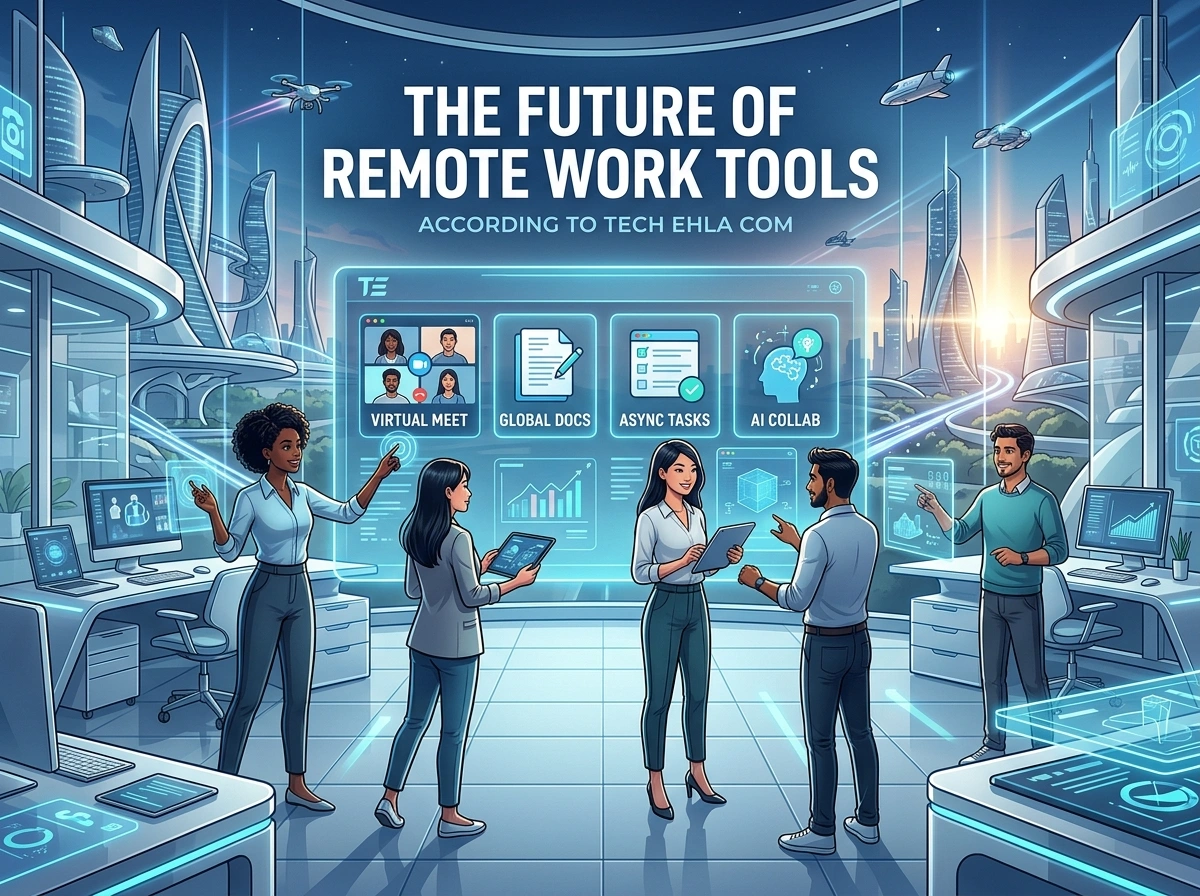
Remote work has moved from a temporary experiment to a permanent fixture of the American workplace. What started as a scramble to keep teams connected has grown into a sophisticated ecosystem of software, hardware, and smart systems. And the tools that power distributed teams are changing faster than ever.
According to insights from tech ehla com, the next wave of remote work technology will focus less on simply replacing the office and more on making distributed teams smarter, safer, and more productive than they ever were in person. Let’s break down the trends that matter most for businesses and professionals across the country.
Why the Remote Work Tool Market Keeps Growing
The numbers tell a clear story. Roughly 22% of the American workforce is expected to work remotely by 2025, and a large share of companies now offer some form of hybrid arrangement. That shift has created steady demand for tools that do more than host video calls.
Employees in California, Texas, New York, and everywhere in between expect technology that adapts to how they actually work. Businesses, meanwhile, want measurable results: higher output, lower overhead, and happier teams. The tools winning today are the ones that deliver on both.
AI-Powered Collaboration Tools
Artificial intelligence has become the engine behind the most exciting changes in remote work software. It’s no longer a buzzword bolted onto old products. It’s baked into the core.
Smart Meeting Assistants
AI meeting tools now record calls, transcribe conversations in real time, and generate summaries with clear action items. Instead of scribbling notes, team members stay present in the discussion. After the call, everyone gets a tidy recap and a list of who owns what.
Automated Workflows
AI also handles the repetitive work that used to eat up hours. Think automatic scheduling, draft replies, data entry, and smart reminders. These small wins add up. A marketing team in Chicago can spend less time on admin and more time on creative work.
The takeaway for businesses: look for platforms that use AI to reduce busywork, not add complexity. The goal is to free up human attention for tasks that actually need it.
Virtual Workspaces and Immersive Environments
The flat grid of faces on a video call is starting to feel dated. The next generation of virtual workspaces aims to recreate the spontaneous, human side of office life.
Some companies are experimenting with digital offices where avatars move between rooms, bump into colleagues, and start quick conversations. Others use spatial audio, so voices get louder as you “walk” closer to someone. These features sound playful, but they solve a real problem: the isolation many remote workers feel.
For teams spread across time zones and states, immersive spaces help rebuild the casual connection that fuels culture and creativity. Adoption is still early, but the trend is clear. Virtual presence is getting richer and more natural.
The Evolution of Project Management Software
Project management platforms have quietly become the backbone of remote operations. They keep everyone aligned when nobody shares a physical desk.
From Task Lists to Command Centers
Modern tools go far beyond checklists. They connect tasks to goals, track budgets, flag bottlenecks, and show real-time progress on a single dashboard. A project lead can see exactly where a launch stands without pinging five different people.
Built-In Analytics
The newest platforms add predictive analytics. They spot patterns and warn you when a deadline is at risk. This shift turns project management from a record-keeping chore into a decision-making advantage.
Actionable tip: choose software that integrates with the tools your team already uses. Fewer disconnected apps means less confusion and cleaner data.
Asynchronous Communication Takes Center Stage
One of the biggest cultural shifts in remote work is the move toward asynchronous communication. Not every message needs an instant reply, and not every meeting needs to happen live.
Async tools let people share updates through recorded video, written docs, and threaded messages that others review on their own schedule. This approach respects the reality of a distributed workforce. A developer in Seattle and a client manager in Miami don’t have to sync their calendars just to trade quick updates.
The benefits are real:
- Fewer interruptions, so people protect their deep focus time.
- Better documentation, since decisions are written down.
- More inclusion, because quieter voices get space to contribute.
Companies that master async communication often report fewer meetings and higher output. The trick is setting clear norms so nothing important slips through the cracks.
Cybersecurity for Distributed Teams
As work spreads across home offices, coffee shops, and coworking spaces, security risks multiply. Every new device and network is a potential entry point for attackers. This is a top concern for American businesses navigating strict data regulations.
Zero-Trust Security
The industry is moving toward a zero-trust model. Instead of assuming anyone inside the network is safe, the system verifies every user and device, every time. It sounds strict, but it dramatically reduces the chance of a breach.
Practical Protections
Businesses are also leaning on:
- Multi-factor authentication on all accounts.
- Encrypted communication for sensitive data.
- Automated threat detection that flags unusual activity fast.
- Regular training so employees can spot phishing attempts.
Security is no longer just the IT department’s job. It’s a shared responsibility that smart tools make easier to manage. For companies handling customer data, strong protection also supports compliance with federal and state privacy rules.
Productivity Innovations Worth Watching
Beyond the big categories, a handful of smaller innovations are reshaping the daily remote work experience.
Focus and Wellbeing Tools
Burnout is a genuine risk when home and work blur together. New apps track workload, encourage breaks, and help people set boundaries. Some platforms even nudge managers when a team member logs too many late nights.
Unified Digital Workspaces
Switching between a dozen apps kills momentum. The trend now is toward all-in-one hubs that combine chat, files, tasks, and calls in one place. Less app-hopping means more focus and fewer forgotten details.
Voice and Natural Language Interfaces
Talking to your software is becoming normal. You can ask a tool to pull up last week’s report or schedule a review, and it just happens. These interfaces lower the learning curve and speed up routine tasks.
What This Means for Your Business
The direction is clear: remote work tools are becoming more intelligent, more connected, and more human-centered. But new technology only helps if you adopt it thoughtfully. Here are a few steps to stay ahead:
- Audit your current stack. Identify tools that overlap or slow people down, then trim the clutter.
- Prioritize integration. Choose platforms that talk to each other, so data flows smoothly.
- Invest in security early. A breach costs far more than prevention. Build strong habits now.
- Train your people. The best tool fails if nobody knows how to use it well.
- Gather feedback. Ask your team what’s working and what isn’t, then adjust.
Final Thoughts
The future of remote work isn’t about copying the office on a screen. It’s about building something better, where AI handles the busywork, virtual spaces keep teams connected, and smart security protects everyone. Businesses that embrace these tools with a clear strategy will attract top talent, boost productivity, and stay competitive in a fast-moving market.
The technology is here, and it keeps improving. The real question is how quickly your organization will put it to work. Start small, stay curious, and keep your team at the center of every decision. That’s how you turn the promise of remote work into lasting results.